Cardio Clear 7 Official Website › Guides
Heart Supplement Reference Guides
Two long reference guides sit alongside the product pages on this website. The first explains what the heart supplement category actually contains and which ingredients have evidence behind them. The second is a nine-point checklist for reading any supplement label, and it scores the product this desk sells against its own checklist.
Editorial rather than commercial. Neither of these is a sales page, and the second one marks its own homework.
Two reference guides, written to be useful on their own
The Heart Health Supplement Guide
What is actually in the heart supplement aisle, ingredient by ingredient: coenzyme Q10, omega-3, plant sterols, red yeast rice, magnesium, nitrate donors, and the botanicals that turn up with very little behind them. What the evidence says for each, and which claims the category makes that it should not.
Best for: anyone standing in front of a shelf trying to work out what is worth buying.
Choosing A Heart Supplement
A nine-point checklist for reading a supplement label in five minutes: amounts, forms, extract ratios, other ingredients, allergens, seals, certificates, the refund window and the seller. Then the same checklist applied to the product this website sells, with the failures printed.
Best for: anyone who wants a method rather than a recommendation.
Both guides link out to the research and to the government pages they draw on, and both are written to be read by somebody who is not going to buy anything from this website. That is deliberate: a guide written to sell is not a guide.
They are long, and they are long for a reason. A two-hundred-word explainer on coenzyme Q10 can only tell you that it lives in mitochondria and that heart muscle has a lot of them, which is the part every page in this category already says. The useful material is in the disagreement: three Cochrane reviews that complicate the most quoted trial, two meta-analyses on statin muscle symptoms that reach opposite conclusions, and a muscle biopsy study that undercuts the mechanism everybody cites. None of that fits in a summary.
Read the first if you want to know what an ingredient does. Read the second if you want a method you can apply to a bottle you are already holding. If you only have time for one, the second is the more transferable, because a checklist outlasts any individual product, including this one.
What is deliberately not in these guides
Four things a reader might expect to find here are missing on purpose, and each omission is a decision rather than an oversight.
- ›No product ranking. There is no best heart supplement list, because a ranking published by a seller is an advertisement with numbers on it, and because the honest answer depends on what you are taking it for.
- ›No named competitors. Comparing this product to a rival by name invites a comparison written to be won. The checklist works on any bottle, which is more useful and less flattering.
- ›No dosage recommendations. The guides print the doses trials used. They do not tell you what to take, because that is a conversation with a clinician and not a paragraph on a retail website.
- ›No before and after anything. No photographs, no case studies, no composite customers. Everything attributed to a person on this website is attributed to a person who exists, and where the desk holds no text for a named person it publishes the photograph without words.
There is a fifth omission worth naming because it is the one a reader is most likely to want. Neither guide tells you whether to buy this product. The second one gives you nine points and the score, and the decision is yours to make with them. A guide that ended in a recommendation would be a sales page with a longer run-up, and both of these were written to survive being read by somebody who leaves without buying anything.
Why a retail website publishes guides that argue with it
The obvious objection to a seller publishing a buying guide is that the guide will point at the seller. So here is the test: the second guide scores Cardio Clear 7 against a nine-point checklist and it fails four of the nine, and the four are printed rather than softened.
That is the only version of a buying guide worth publishing from a commercial site. The first one tells you what the evidence supports across the category, including ingredients this product does not contain and cannot sell you. The second gives you a method you can take to any bottle, including a competitor’s.
If either guide is wrong about something, write to [email protected] and it will be corrected on the page, with the review date moved forward.
How these guides are researched
Both guides were written the same way, and the method is worth printing because it is the only thing that distinguishes a reference guide from an advertorial with subheadings.
- Start from the ingredient, not the keyword. Each section began with a compound that appears on real labels in this category, rather than with a search term somebody wanted to rank for. That is why the first guide spends paragraphs on omega-3, plant sterols and red yeast rice, none of which this website sells.
- Find the primary literature. Systematic reviews and meta-analyses first, randomised trials second, then the neutral government summaries. Marketing pages and other affiliate sites were not used as sources for anything.
- Verify every identifier. Each PubMed record was confirmed through the NCBI summary API, which returns the author, year, journal and title. A citation that came back as a different paper was discarded rather than corrected from memory.
- Open every government page in a browser. Several of these hosts refuse non-browser clients in ways that look exactly like a dead link, so a command-line check would have reported live pages as broken.
- Print the unhelpful findings. Two of the Cochrane reviews cited here reach conclusions that do this product no favours, and both are in the guides.
What is deliberately absent is also part of the method. Neither guide ranks products, neither compares this product to a named competitor, and neither contains a best of list. Those formats exist to place affiliate links, and a guide built around them would be a shopping page wearing a lab coat.
The questions these two guides answer
If you are deciding whether either is worth your time, here is what they actually cover, as questions.
What is in the heart supplement aisle?
Eight ingredient groups that recur, from coenzyme Q10 and omega-3 through plant sterols and red yeast rice to the mineral and botanical end. Guide one.
Which ones have evidence behind them?
Named trial by trial, including the Cochrane reviews that complicate the most popular ingredient in the category. Guide one.
What should a heart supplement never claim?
Four claims, and why each one is outside what a dietary supplement may say. Guide one.
How do I read a supplement label?
Nine points in the order that decides anything, starting with the amount column. Guide two.
What does each seal on a bottle mean?
GMP, FDA-registered, non-GMO, natural, doctor formulated and a certificate reference, with what each one does not mean. Guide two.
How does this product score?
Four passes, one partial and four fails, printed in a table by the desk that sells it. Guide two.
Between them the two answer the questions a buyer in this category asks before they get as far as a brand name. That is deliberate: a guide that only makes sense if you have already decided what to buy is not a guide.
Who these guides are written for
Three readers, and the guides are useful to all three for different reasons.
Somebody comparing products. The nine-point checklist in the second guide works on any bottle, and two or three of the nine will sort most of a shelf in under a minute. Take it to a competitor. That is what it is for.
Somebody who has been sent a link by a family member. The first guide is the quickest way to find out whether an ingredient in a product somebody is enthusiastic about has anything behind it, without having to read a sales page to work it out.
Somebody about to order from this website. The second guide scores this product and prints the four points it fails. If you are going to buy it, buying it knowing what is missing from the label is better than buying it without, and the label page is the fuller version of the same material.
Neither guide was written to be read by somebody who has already decided. If you have, the ingredients page and the pricing page are the ones that will answer your actual questions faster.
Sources with nothing to sell you
- ›NCCIH on dietary and herbal supplements, which is the plainest neutral introduction to the category.
- ›NCCIH Know the Science, a short course in reading health research that takes about twenty minutes.
- ›NHLBI heart-healthy living, the interventions with the best evidence behind them, none of which is sold in a bottle.
- ›FDA questions and answers on dietary supplements, for what is and is not regulated.
- ›NIA on supplements for older adults, which is the most relevant page for most buyers in this category.

Every page, every journal post, the bottle facts and the ingredients go through review by Dr. Brenda McCool, ND before they ship. We write these pages from the printed Cardio Clear 7 bottle and the manufacturer’s own listing artwork, cite public research for coenzyme Q10, shilajit and PQQ, and print “not published” wherever a figure is not disclosed rather than estimating it. This label publishes no amount for any of its three ingredients, and that fact appears on every page where an ingredient is named. Where the seller’s marketing claims more than the bottle supports, we say so on the page. Corrections are made on the page itself and the review date moves forward. Write to [email protected]. Last reviewed September 2026 by Dr. Brenda McCool, ND.
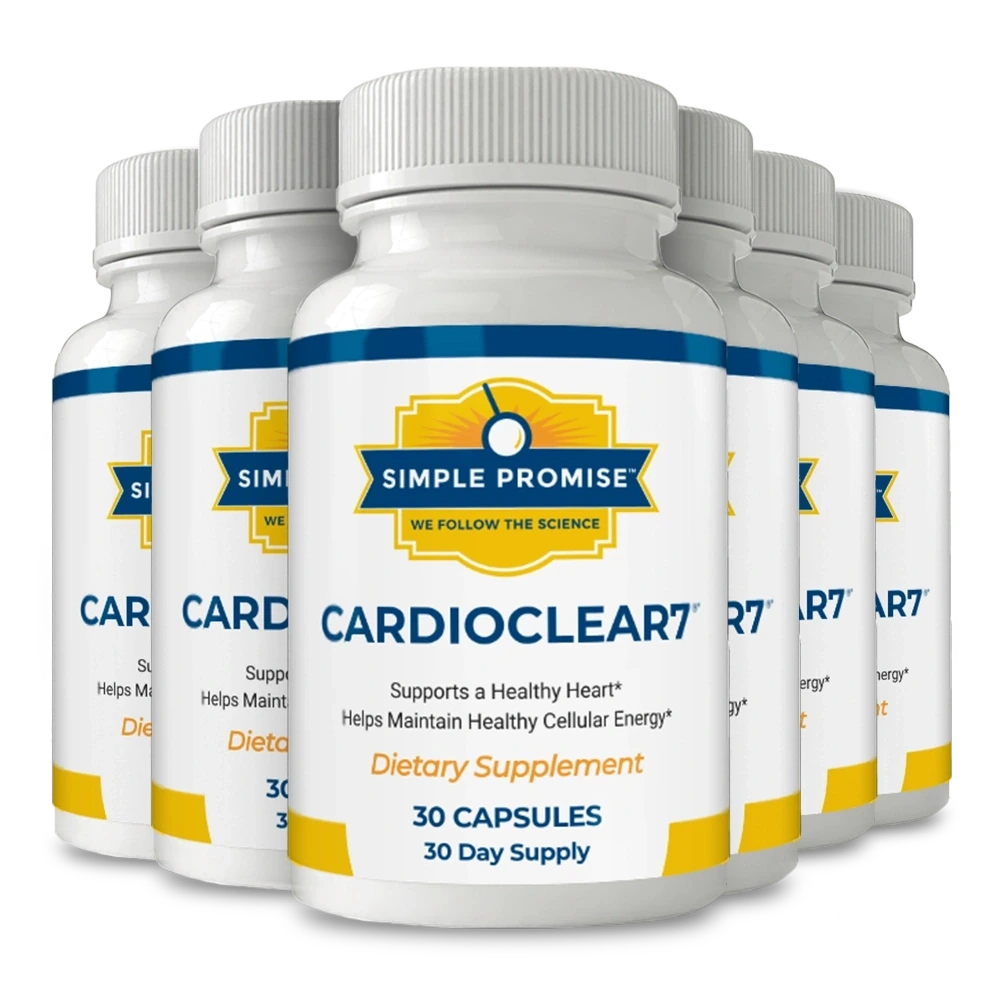
Order Cardio Clear 7 on the official website
Read the guides first if you want to. They were written for somebody who might not buy anything.
Price shown at checkout · 60 days to change your mind
Get Cardio Clear 7 — Price At CheckoutOne-time payment, no subscription · 60-day money-back guarantee · lot CAR-26/CA-5447 · order desk +1 (302) 200-3480